How to overcome decision paralysis with standardisation in healthcare furniture procurement
For healthcare staff tasked with procurement decisions, furniture selection can feel like just another minefield. Time is tight, demands are high, an…
48 Hour Express Range
Our 48 Hour Express Range (1 week for Scotland and islands) provides a wide variety of the essentia…
48 Hour Express Range
Paediatric Range
Paediatric healthcare furniture range including chairs, tables and storage.
Paediatric Range
Pressure Care
It is easier to prevent pressure sores than to treat them, pressure care options for medium and low…
Pressure Care
Product Videos
Discover the features and benefits of Ocura products through our informative product videos.
Product Videos
Colour Swatches
View and download the antibacterial vinyl colour swatches available for our healthcare products.
Colour Swatches
White Papers
The goal of these white papers is to provide in-depth information and insights about the impact fur…
White Papers
Frequently Asked Questions
Find out all you need to know about our team, products and services.
Frequently Asked Questions
Case Studies
Discover how Ocura products have transformed our clients healthcare environments
Case Studies
Knowledge Hub
Everything you need to know about Ocura products and healthcare furniture. Here we share the resear…
Knowledge Hub
Q&A with Paul Rogers, Managing Director and John Plunkett, Design Engineer at Ocura Healthcare Furniture, hosted by Jade Pearse, Marketing Lead.
So, what does it take to design, manufacture and launch an industry-leading piece of furniture? Most people wouldn’t know, but here at Ocura we do.
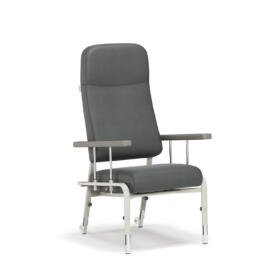
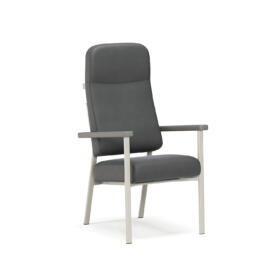
We sat down with our Managing Director, Paul Rogers, and Design Engineer, John Plunkett, to give you an insider’s understanding of everything it took to create Arvada® 2.
Ocura’s most comfortable & supportive patient bedside chair yet.
Firstly, a huge congratulations on the launch of Arvada 2! A lot of hard work has gone into this piece of healthcare furniture, and it truly shows. There are several changes compared to the original and we’d love to unpack them in this Q&A. Secondly, thanks for taking the time to sit down to discuss. Let’s get into it!
Paul: “Anything we do is aligned with our 6E’s and our ‘why’ – they must drive it. By starting with those, you start with the end in mind. You must ask yourself ‘What are you trying to deliver, and for who?’.”
John: “I’d say that looking at previous feedback is always a good place to start. We took user feedback from the first Arvada and used it to improve Arvada 2 based on their needs and requirements.”
Paul: “The 6E’s is the design ethos of our business – that’s what makes our business unique to any other that designs chairs for healthcare. It keeps us focused on our healthcare market.”
Paul: “The stakeholder groups of healthcare must be the people you keep in focus. So, for example, IPC – what do they want from a product? Manual handing – what do they want from a product? Same goes for Tissue Viability and Nursing Staff.”
“Essentially, it’s what do each of these groups want, and then adding in ‘what does an end user want from a product?’. If you encompass every part of healthcare stakeholder groups, you start to end up with a product that’s designed for healthcare rather than an office or education, for example.”
John: “I think it’s right at the end of the process because, you know, that is when you start to delve right into the detail. When you start to see it all work in real-life because of the changes you’ve made is fantastic.”
“Getting something back that’s tangible, and to get the chair in your hands, I think that’s the proudest part of the process. It’s all good doing the CAD work but to get something back that you can hold, I think that’s the best bit.”
Paul: “I’m proud of the team and the way they’ve come together.”
“The level of detail that you [John] need to go into — that most wouldn’t even know about or notice — is exceptional. Also, applying your learnings of how people use a hospital chair (from your personal journey of visiting with your pregnant wife) has really shone through.”
Paul: “First of all, and most importantly, there was the ergonomics, and the comfort of the user. Given the mission of care givers wanting to move people out of beds, getting them to recover quicker, seeing a seat as something comfortable to get out of is so important. Being able to distribute pressure across the seat in a uniformed way to reduce things like pressure sores is key. So, I think ergonomics was our number one improver from the original Arvada to Arvada 2.”
“A lot of time, effort and energy went into the backrest to create the ideal lumbar support. So far Arvada 2 is a product that everyone has sat in and gone ‘Wow, this is comfortable!’. That’s probably our biggest improvement.”
“The remainder of the product, I’d say, is small evolution rather than improvement. John has managed to evolve how the height adjustable arm and legs work.”
“Another area of improvement worth mentioning, though not directly of use to the end user or customer, is the ability to stack the frame in our production space. This will reduce our Co2 footprint when we’re moving a product around pre-delivery. We’re able to now stack 10 – 12 frames in a square metre compared to the old design of only 2. It’s a massive impact on vehicles and transportation of the chair itself.”
“So, yeah there are a few improvements…”
John: “Overall, we’ve cut down on the number of parts to build the chair. For example, on the previous model we had individual left and right arm pads, but on the newer Arvada 2 we have one singular arm pad that can go on either side. This helps to reduce waste and efficiencies in production.”
Paul: “Some of it wasn’t even about improving, it was keeping what was unique to Arvada in the first iteration. The Frame for Life and the fact people can sit on a chair for 25 years, keep the metal frame and replace parts is brilliant. That cost saving to the healthcare provider, and planet, was already in Arvada, so we had to keep it in the new iteration. It’s not always about what needs improving, it’s about keeping what was already good.”
Paul: “I think technology and our investment in an internal design engineer – I don’t believe an external company could do this. And quite frankly, after 10 years on the market, it’s about time for a refresh!”
John: “On top of everything we’ve already spoken about, I’d highlight the seat cushion. It is thicker this time around, so it is more visually pleasing as well as being practically more comfortable for the user.”
“By increasing the seat cushion height, if a care giver wanted to switch out the standard seat cushion to one more catered for pressure care requirements, then the seat height won’t be lessened. This provides a much more comfortable experience to all users, no matter their needs.”
“We also now have two seating positions so the depth of the seat cushion can be slightly deeper or shallower depends on the user’s preference.”
Paul: “We have an example of this where a taller member of Team Ocura sat in the chair and said it was the first time a chair that supported him behind the lower part of his knee area. He’s never had that before given how tall he is – quite an important aspect.”
Paul: “The first thing most of our clients say to us is that we want a homely environment. However, a hospital is not a home, it is a clinical environment. If you take a hospital and it’s in most clinical position — a theatre – you would not expect to see wooden products or wooden furniture in a theatre so why release your standards when you’re on a ward.”
“You should strive for the best when it comes to investing in your products, so providing a metal framed chair with antibacterial and antimicrobial powder-coating gives you something that is not only fit for purpose in a clinical environment, but also enables you to just do things like Frame for Life.”
“When budgets are challenged, the ability to unscrew an arm pad, change a seat cushion or a back rest, is fundamental of the lifecycle of that product. You just can’t do that with wood.”
Paul: “Arvada 2 is a stepping stone – you can’t see it as a solution for PJ paralysis. Seating will never be a solution, because you’re attempting to get someone out of a bed. You’re attempting to get someone clothed and mobile again. A chair will never get you particularly mobile, but it will provide that stepping stone.”
“If you’ve been through surgery, or whatever it is that has kept you in a bed, having a stepping stone to progress towards getting dressed and being mobile, the chair becomes quite vital. I think visitors see you in a different light if they see you in a chair. They presume you’re getting better, quicker. That whole positive mindset that a chair can create is that stepping stone.”
“Why would you get out of a bed, with a pressure care mattress in, if the chair isn’t comfortable? So, the chair has got to be able to offer you extreme levels of comfort. Plus, it must look good – it needs to be inviting but it will always be a stepping stone and not a full solution.”
Thank you, Paul and John, for sitting down with us today to chat all things Arvada 2. We’re excited to see this fantastic piece of furniture in use across healthcare environments across the UK. It truly is one of the most (if not, the most!) comfortable and supportive patient bedside chairs within healthcare.
If you’d like to discover how Arvada 2 can transform your healthcare environment, get in touch with the team today.
For healthcare staff tasked with procurement decisions, furniture selection can feel like just another minefield. Time is tight, demands are high, an…
A single piece of equipment that could handle every step of the patient journey. Too good to be true? Not at all. Let’s explore how the right furnitu…
What if we told you there’s one piece of furniture that can help you reduce staff injury risks, cut costs, save time, and improve infection control —…
In a recent discussion, we sat down with Trevor Garcia, an Independent Decontamination Consultant with 37 years of experience in the NHS, to uncover …